
Skip to content
The Luteal Week

A practical guide to the week before your period

How to Control Premenstrual Mood Swings

You control premenstrual mood swings by learning exactly when they arrive, planning your hardest days around them, and bringing a tracked record to a clinician if they disrupt your life. The Luteal Week walks you through each step, from reading your luteal-phase pattern to preparing for an appointment where you finally feel heard.

Last updated:

How do you control premenstrual mood swings?

Start by tracking your mood and cycle day every day for two or three cycles. Once you can see which days repeat, you can protect sleep and meals on those days, lighten your schedule, and move hard conversations to calmer weeks.

If the swings interfere with work, relationships, or how you see yourself, take your record to a clinician. Evidence-supported treatments exist, and the DSM-5 requires at least two cycles of tracking before diagnosing PMDD.

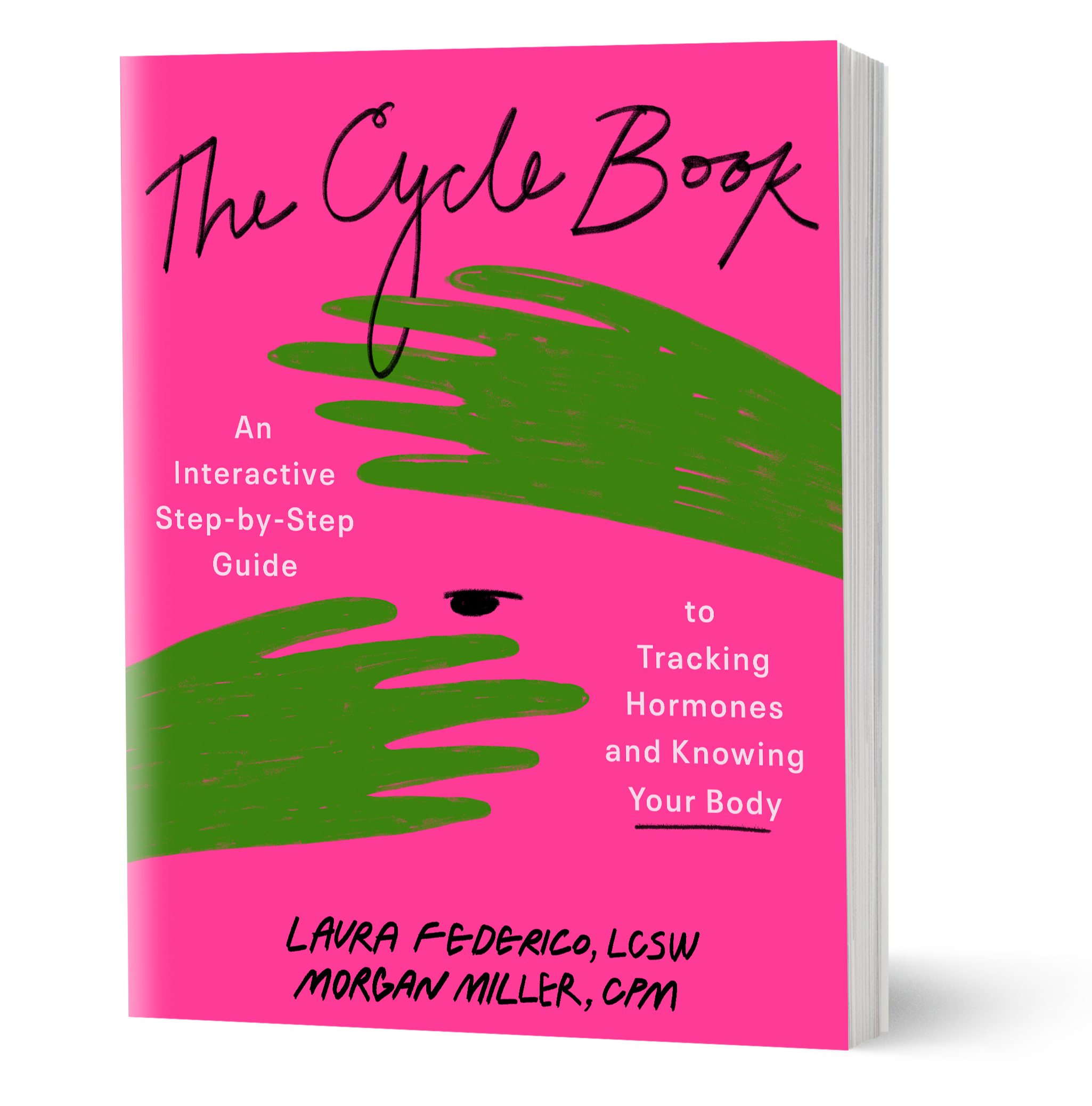
Front cover of The Cycle Book: An Interactive Step-by-Step Guide to Tracking Hormones and Knowing Your Body
The Cycle Book, by sex therapist Laura Federico and midwife Morgan Miller, is the tracking workbook this guide recommends.

What are premenstrual mood swings?

Premenstrual mood swings are shifts in mood, patience, and emotional sensitivity that show up in the days before a period and ease once bleeding starts.

The definition, in one paragraph

We define premenstrual mood swings as a repeating pattern of irritability, anxiety, tearfulness, low mood, or overwhelm that appears in the luteal phase, the stretch between ovulation and your period. The MGH Center for Women's Mental Health describes PMS as physical, emotional, and behavioral symptoms that occur one to two weeks before a period and remit once it starts. The key word is pattern: a hard day is just a hard day, but a hard day that returns at the same point in every cycle is information you can plan around. When the pattern is severe enough to interfere with daily life, it may be PMDD, premenstrual dysphoric disorder, which a clinician diagnoses using at least two cycles of daily tracking.

Why they happen

After ovulation, progesterone rises. If pregnancy does not happen, progesterone and estrogen both drop in the final days before bleeding. Estrogen supports serotonin, a brain chemical tied to mood stability, and progesterone interacts with the brain's calming GABA system. As those hormones shift, your stress tolerance and emotional bandwidth can shift too. Not everyone is affected the same way: the hormones are normal, but sensitivity to them varies from person to person. That is why two people with similar cycles can have very different luteal weeks, and why your own record matters more than any average. Read more in our guide to how the luteal phase affects mood.

The numbers behind premenstrual mood

Premenstrual symptoms are common, and the severe end is more common than many people realize.

What published research shows

  • At least 90% of women with regular menstrual cycles report unpleasant physical or psychological symptoms before their period.
  • 47.8% is the estimated global prevalence of PMS, and 3 to 8% of women of reproductive age have PMDD, its most severe form.
  • 7 to 10 days before a period is when PMS and PMDD symptoms usually begin, continuing into the first few days of bleeding.
  • Two cycles of daily tracking is the minimum the DSM-5 requires to diagnose PMDD, which is why tracking sits at the center of this guide.

See every statistic with its source on our by the numbers page.

A five-step plan for your next luteal phase

This is the practical core of controlling premenstrual mood swings. It takes about two minutes a day.

  1. Mark day 1

    The first day of bleeding is day 1 of your cycle. Write it down, then count forward every day until the next period.
  2. Rate your mood daily

    Note mood, irritability, anxiety, sleep, and energy each day on a simple scale. Add any big event that could explain a hard day.
  3. Find the repeating days

    After two or three cycles, look for cycle days that are hard every time. Those are your luteal-phase pattern.
  4. Plan around them

    On those days, protect sleep, eat regularly, lighten commitments, and agree a pause plan for conflict with the people close to you.
  5. Take your record to a clinician

    If the pattern disrupts your life, bring your tracking to an appointment. It turns a vague complaint into evidence.

How does luteal phase affect mood?

The luteal phase affects mood by narrowing your emotional margin, especially in its final days. A typical luteal phase lasts 12 to 14 days, and 10 to 17 days can also be considered normal. Many people feel steady early in the phase, then more irritable, anxious, foggy, or tearful as hormones fall before bleeding.

How to feel better during luteal phase

To feel better during the luteal phase, give your body steadier fuel, more rest, and fewer demands, and plan ahead for the specific days your tracking shows are hardest. Small supports add up: regular meals with protein and fiber, an earlier bedtime, and a simple agreement to pause arguments for 20 minutes.

Which way of tracking your cycle should you choose?

Choose the method you will actually keep up every day. The table compares three common options on facts that matter for tracking mood.

Comparison figures from our audit
The Cycle Book (paper workbook)Period tracking appBlank notebook
Cost$22.00 one-time on the authors' shopVaries; some free, some by subscriptionPrice of a notebook
SubscriptionNoneDepends on the appNone
Guided mood promptsYes: anxiety, brain fog, irritability, libido, fatigue, stressVaries by appNo; you design it
Where your records liveOn paper, with youIn the appOn paper, with you
Length12 months, undatedOngoingAs long as you keep it
Written byA sex therapist and a midwifeVariesYou

Want the details? Our guide to tracking your menstrual cycle explains what to record and how to read it.

The Cycle Book photographed in person
The Cycle Book is a 12-month undated workbook, so you can start it in any month.

Our pick for tracking

The Cycle Book: a paper guide for seeing your own pattern

The Cycle Book: An Interactive Step-by-Step Guide to Tracking Hormones and Knowing Your Body is written by sex therapist Laura Federico and midwife Morgan Miller. It is a 12-month undated workbook that guides you to track your period, ovulation, and fertile window alongside mood, anxiety, brain fog, irritability, libido, fatigue, and stress. No apps and no subscriptions. Listed at $22.00 on the authors' shop, as of November 2026.

  • "Understanding my cycle has always been a lonely struggle. Doctors. Friends. Family. Random people on Reddit. Nobody ever seemed to be able to grasp what wasn't right with me."

    Mackenzie Thomas, Artist and writer of I Will Do Whatever I Want
  • "It provides so much practical wisdom about cycle-tracking and systematically removes the hurdles that can make it feel overwhelming."

    Sarah Hill, PhD, Author of This is Your Brain on Birth Control

Who wrote the book this guide recommends?

Laura Federico and Morgan Miller sitting on a gray sofa, one in a colorful plaid shirt and the other in a black blazer, with green plants in front of them
Laura Federico, LCSW, CST, and Morgan Miller, CPM, LM, IBCLC, authors of The Cycle Book.

Laura Federico is a psychotherapist and AASECT-certified sex therapist who focuses on bodily autonomy and support for people who have felt dismissed when navigating their emotional and physical wellbeing.

Morgan Miller is a practicing midwife, birth center founder, and International Board Certified Lactation Consultant with over 10 years of experience caring for people throughout their reproductive cycles.

Together they teach hormone-informed mental health, including cycle tracking workshops for the International Association for Premenstrual Disorders.

Common questions

Short answers below. See all 45 questions on the full FAQ page.

What phase is a female most moody in?

Most people who notice cycle-linked mood changes feel them most in the late luteal phase, the week or so before bleeding. PMS and PMDD symptoms usually begin seven to 10 days before a period and continue for the first few days of bleeding. Some people also feel intense around ovulation, so your own record matters more than the average.

More in the FAQ: What phase is a female most moody in?

How to calm PMS rage?

Pause before you respond. Leave the room, say you need 20 minutes, and come back. Use the break to breathe, drink water, or eat if you have gone too long without food. Afterward, note the day and trigger in your tracker. If rage is frequent or frightening, bring that record to a clinician.

More in the FAQ: How to calm PMS rage?

What to do about severe PMS mood swings?

Treat severe PMS mood swings as worth a clinician visit, not something to push through. Start tracking mood and cycle day daily so the timing is visible; the DSM-5 requires two cycles of tracking for a PMDD diagnosis. Evidence-supported options exist, including SSRIs, which research found effective compared with placebo.

More in the FAQ: What to do about severe PMS mood swings?

Does the luteal phase make you tired?

Yes, the luteal phase makes many people more tired. Progesterone can feel sedating for some, sleep can become lighter before a period, and resting metabolic rate rises anywhere between 3 and 10% in different studies. Fatigue that is extreme, or that lasts all month, is worth checking with a clinician.

More in the FAQ: Does the luteal phase make you tired?

How many cycles should I track before seeing a doctor?

Track at least two cycles. The DSM-5 requires a minimum of two cycles of tracking to diagnose PMDD, and arriving with two to three cycles already completed can speed up the diagnostic process. If symptoms are severe or you feel unsafe, do not wait to finish tracking before getting help.

More in the FAQ: How many cycles should I track before seeing a doctor?

Can magnesium help with mood swings during PMS?

This guide does not recommend specific supplements. Many people ask about magnesium, and the right person to answer is a clinician or pharmacist, especially if you take other medications or have kidney concerns. The treatment with the strongest research support for PMDD is SSRIs. Tracking lets you test any change with a clear before and after.

More in the FAQ: Can magnesium help with mood swings during PMS?

Tired of being told it is all in your head?

Laura Federico, a sex therapist, and Morgan Miller, a midwife, wrote The Cycle Book for people who want to understand their cycle and hormones. Get in touch with them, find the book, or join their free Ask L&M sessions.

Contact Laura & Morgan